
A power cut or disrupted water supply is easier to manage when the basics are already at home. The UK government’s Be Ready campaign recommends preparing for three days and building supplies gradually.
You do not need an expensive survival bundle. Start with your cupboards, work out what is missing and buy useful essentials within your normal budget.
Affiliate disclosure: As an Amazon Associate I earn from qualifying purchases. This is an independent Money Saving Assistant guide, not a government publication or an endorsement of Amazon by the Be Ready campaign.
What should I stock up on?
Plan three days of water and ready-to-eat food, a torch, FM radio, charged power bank, warm clothing, hygiene and first aid supplies. Include your household’s medicines, baby or pet needs. Keep important contacts and documents accessible.
Buy only what is missing. Amazon is one place to compare supplies; it is not automatically the cheapest.
How much water should you plan for?
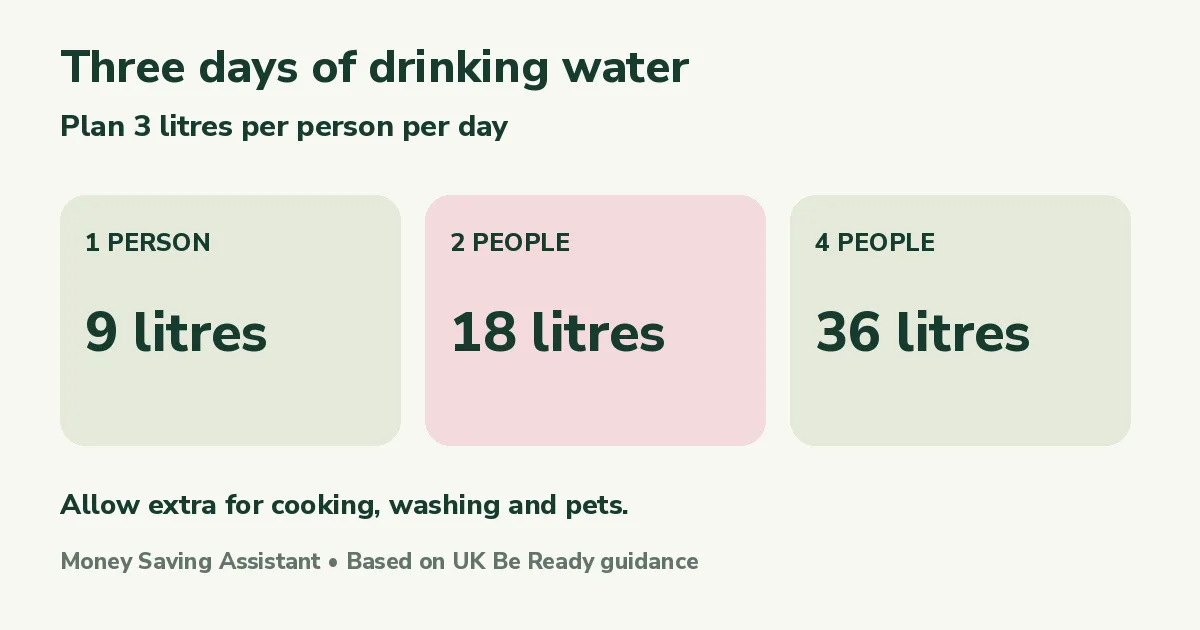
Be Ready specifies three litres per person per day for drinking, with more for cooking and washing. Over three days that is nine litres each, 18 litres for two people or 36 litres for four. Allow separately for pets and other household needs.
Compare price per litre, delivery charges, storage space and how easily you can handle the containers. A large online case is not necessarily better value than supermarket bottles. Keep water according to the label and rotate your stock.
Your emergency supplies shopping checklist
The table combines the campaign’s main categories with our shopping tips. Amazon links below open searches, not tested product recommendations or verified live deals. Check the exact listing, seller, delivery date and product instructions.
| Category | What to check | Money-saving approach | Shopping link |
|---|---|---|---|
| Water | Bottled drinking water | Compare the delivered price per litre; local collection may cost less. | Compare on Amazon |
| Food | Long-life food you can eat without cooking | Choose familiar food; include a manual tin opener if needed. | Compare on Amazon |
| Light | Torch and matching spare batteries | Check what batteries it takes and whether they are included. | Compare on Amazon |
| Information | Battery-powered or wind-up FM radio | Prioritise clear controls, FM reception and practical power options. | Compare on Amazon |
| Phone power | Charged power bank and suitable cable | Check the connector and charging compatibility with your phone. | Compare on Amazon |
| Warmth | Blankets and warm clothing | Use what you already own before buying more. | Compare on Amazon |
| Hygiene | Wipes, sanitiser and bathroom supplies | Compare cost per wipe or per 100 ml, not just pack price. | Compare on Amazon |
| First aid | Basic first aid supplies | Check existing supplies and expiry dates before buying a complete kit. | Compare on Amazon |
| Household needs | Baby supplies or pet food where needed | Buy the type and size your household already uses. | Compare on Amazon |
For medicines, use your usual pharmacy and prescription process. Do not buy or change medication simply to fill a generic shopping checklist.
How to build your supplies without a big bill
1. Do a cupboard check before ordering
Put suitable items together and note what you have. A working torch, spare phone cable, blankets and familiar tinned food all reduce your shopping list. Test equipment rather than assuming it works because it is in a drawer.
2. Set a spending limit for the gaps
Decide what you can afford after normal essentials. Add one or two missing items during ordinary shopping trips. If a £10 weekly limit suits your budget, use it as a cap, not a target you must spend. There is no single kit price that fits every household.
3. Buy food you will use anyway
A discounted box of unfamiliar food is poor value if it stays untouched until it expires. Compare cost per serving, dietary needs and whether the food can be eaten as supplied. Dry rice and pasta are everyday cupboard staples but need water and cooking, so they do not serve the same purpose as ready-to-eat food.
4. Check bundle contents against individual prices
An emergency kit may look convenient while duplicating things you already own. List what you actually need from the bundle and compare that with buying those items separately. A large number of small pieces is not a useful measure of value.
5. Use discounts only when the basket is cheaper
Our Subscribe & Save review explains eligible repeat-order savings and vouchers. Recurring food or hygiene products may suit subscriptions if you will use them, but a torch or radio does not need a regular delivery. Do not add unwanted items or subscriptions just to unlock a discount.
Buying an emergency radio: keep it practical
Look for the FM reception recommended in the campaign, readable controls and a power source you can maintain. Compare a basic battery radio with a wind-up model. For each listing, check battery requirements, stated run time, charging instructions and whether a cable is supplied.
A radio advertised with a torch, solar panel and phone charging can look good value, but check each function’s specifications. Do not assume a small built-in panel or crank will replace a charged phone power bank. Product features should earn their place in your budget.
Compare FM emergency radios on Amazon UK →
Families, babies and pets
Build around your actual routine. Check nappy sizes, usual wipes and pet food quantities before buying multipacks. The campaign recommends ready-to-feed formula where formula is needed, because boiling water may be unavailable. Follow feeding, hygiene and storage instructions for your baby’s usual supplies.
Our nappy unit-price guide and baby wipes review can help with comparisons. Buy a manageable quantity rather than a large pack your household will not use.
Preparation that costs nothing
Write down important contacts, agree a household plan and check on neighbours who may need support. Keep a little cash if affordable, plus accessible document copies. Check eligibility for extra help through the Priority Services Register. Review supplies every six months.
Use the official Be Ready page for the full checklist, local-risk information and household planning advice.
Frequently asked questions
Is there an official Amazon Be Ready kit?
This guide does not identify one. The government guidance provides a household checklist, not an Amazon product recommendation. Our shopping links are independent affiliate searches.
Should I buy everything from Amazon?
No. Compare the same usable quantity with supermarkets and other shops, including delivery costs. Buying locally may make more sense for heavy water bottles or a small top-up.
Do I need to buy everything today?
No. Check what you already have and fill the gaps as your budget allows. Preparing gradually helps avoid unnecessary spending.
How do I avoid wasting food?
Keep a simple list, use older stock first and replace it through your normal shop. Make your emergency food part of a rotation of things you actually eat.
The Money Saving Assistant verdict
Prepare a useful reserve, not an expensive collection of gadgets. The best starting point is what you already own. Compare the missing items, buy within your means and keep supplies usable through regular checks.
Browse emergency supplies on Amazon UK →
Checked on 6 November 2026. Source: UK government Be Ready guidance. Budgeting examples and shopping comparisons are Money Saving Assistant’s editorial advice. No live Amazon prices, stock or complete kit cost have been verified.